Thursday, January 27, 2022

The Many Hats of a Self-Published Author


You can choose to try to find a traditional publisher or put your work out there yourself. If you want to do the latter, it helps to know what is involved before you make a decision.

Whether you submit to publishers or not, you'll need to work with a professional editor at some point. You don't want to send anything but your best work to a publisher or readers.

If you plan to do one book, hire people to do much of what is described here. There's no need to learn most of this, and some editors and formatters are reasonably priced. (Check the Smashwords List.)

  1. Put yourself in a chair and finish the first draft of your book.
  2. Obtain feedback from several sources and revise the book.
  3. Let the work sit for enough time to gain a fresh respective when you reread and revise again.
  4. Work with at least a proofreader (and an editor if you can afford one) to make your book the best it can be.
  5. Decide where to initially publish the book – Amazon only, all major online retailers, paperbacks at one or multiple sites?
  6. Determine whether you need to register as a publisher with Bowker and buy ISBNs
  7. Understand the copyright system. (Note: Under the laws of most nations, your work is copyright as soon as you put it on paper.)
  8. Decide whether to do all steps yourself or work with a hybrid publisher, who assists with self-publishing steps. If you choose this route, do your research and have a lawyer review the proposed contract. The following steps assume you will do all the work yourself, or contract out a few steps and oversee the work.
  9. Begin work with a cover designer by first expressing your ideas for a cover in a paragraph or two. Allow the designer to be creative, within some basic parameters.
  10. Develop a marketing plan, for online and real-world marketing.
  11. Develop a master digital file by stripping the formatting and reinserting it. (Or hire someone to do the formatting. If you do that, only hand it over when you have no more editing to do.)
  12. Approve the cover.
  13. Adapt the master digital file (by saving it with a different name) for each website that will sell your book.
  14. Load the digital book first to Amazon, and carefully review its presentation in the digital previewer. You are not editing text, simply looking at format (such as text size).
  15. Make formatting or layout changes as needed and reload the book.
  16. Choose a date for final publication, preferably in two to three months or longer. (This gives you time to garner sales throughout the preorder phase, thus giving the book a higher rank when it is available for purchase.)
  17. Load the final version of digital book to Amazon and other sites, possibly using an aggregator such as Smashwords or Draft2Digital, so you load fewer times. 
  18. Begin or continue formatting the paperback. 
  19. Load the paperback to a site such as Amazon or Barnes and Noble Press (both free) or IngramSpark (some fees). Proof the paperback, using a paper copy at least once, and digital copy for paperback revisions. Formatting only -- editing is finished!
  20. Consider publishing the paperback two weeks or so before the final digital release date, so you can order copies for the press and bookstores.
  21. Include in initial marketing an email blast to friends and fans who you know will make early purchases. 
  22. Follow this with massive tweeting, and other social media posts (Facebook Groups, Instagram, Pinterest, TikTok, even You Tube).
  23. Implement the rest of your marketing plan (which you have already started). Work in the real world of local and (if appropriate) national media. 
  24. Encourage readers to leave reviews for your books online and try to get local media to review online or in print versions.
  25. Start your next book.
  26. Never stop marketing this one, even if you don’t work on it every day.
Ready to tear your hair out? Don't, you want to look good if you're interviewed on local media. 

The next post on this broad publishing topic will discuss the varied types of publisher.

                                                             *                 *                 *

To learn more about Elaine, go to elaineorr.com or sign up for her newsletter. 

Tuesday, January 18, 2022

Thinking Through Self-Publishing

Over the next few weeks, I'm going to write posts on the benefits of self-publishing and working with a traditional publisher -- whether a large one or a small press. All methods to reach readers can work, but the author's work (when you have your best draft) is different.

This piece deals with the advantages of self-publishing. 

Self-publishing permits an author to control book content and production, as well as how a book or other product reaches readers. It is a weighty responsibility, though if you share it with others – critique groups, an editor, a cover designer – you are not working alone.

Don’t think of it as what to do if you don’t find a publisher. You may want to find one, but I suggest that you set a time limit on your search. You decide when to stop looking – not your spouse or best friend, perhaps not even your agent. 

If you have an agent, listen to them carefully. They know the markets.

Though you want to be aware of available books on a topic, you have an advantage a traditional publisher or small press does not. You are not comparing your work to twenty proposed manuscripts on their desks. 

You present your idea or story directly to readers who will be interested in it. You won’t have invested tens of thousands of dollars in market research, printing costs, or advertising. It costs little to no cash to self-publish – even paperbacks. (You do want an editor -- hold a rummage sale if you don't have the cash.)

The final point in your favor is that the income from your books will be yours. You’ll do some extra work at first, but it will be worth it over time.

Always keep in mind that you don’t want your book in print, whether digitally or on paper, before it is polished. You worked on your book, article, essay, or short story for a long time. Let it be a quality product.

You only get one chance to make a first impression.

The next article will deal with some of the work involved in self-publishing. The one after that will talk about advantages of working with a publisher.

Don't stop writing!

                                                             *                 *                 *

To learn more about Elaine, go to elaineorr.com or sign up for her newsletter. 

Saturday, January 15, 2022

Shortening Web Addresses

Web address are long and who wants to look at a 50-character (or longer) link in a tweet or email? You can now use one of several services to shrink them.

I use Bitly - https://app.bitly.com/

Another good one is https://tinyurl.com/app

There are others, but most authors I know use these two.

Both have a free option. At Bitly, you can pay to tailor your Urls so they have your name or publishing company in the shortened url. In fact, if you create a Url for a book listed at Amazon, the tiny url will start with amzn. Others (for your free Bitly account) will be a mix of letters and numbers, though all with start with bit.ly.

 The basic steps are:

1)      Create an account

2)      Click something that will say “Create” or “Add long Url.”

3)      Enter the long url.

4)      Press something that will say “Create Link” or “Continue.”

5)    Copy the link and enter it in a tweet or save it to a document on your computer.

6)      Edit the link name if that is an option.

I edit all my shortened Urls so the list that Bitly automatically creates for me is easy to use. You could name them so they all start with the name of a site (Nook Least Trodden Ground) or start with the book name (which you would likely abbreviate (Least for Nook, Least for ibooks).

It may seem like a pain to create a separate document to store these when they are stored at the site where you make them. I don't, but what I do have is a list of tweets I will reuse. That way I don't have to retype them. Those tweets store the shortened urls.

Anything to save time. 

                                                             *                 *                 *

To learn more about Elaine, go to elaineorr.com or sign up for her newsletter. 
Thursday, December 30, 2021

A Picture Can Lead to 1,000 Words

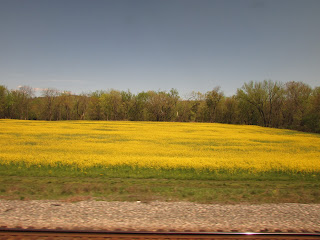
 I often take pictures of scenery similar to that in my fiction. Grain elevators feature in Demise of a Devious Suspect, and I have dozens of single and multiple silos.

Because I could not travel to Garrett County, Maryland as I wrote the Family History Mystery Series, I'm especially thankful to have photos of that area. Even more so to have captured images from the trains, since they traverse areas I can't travel by car.

Some of these are in Maryland, others may be in West Virginia. There are no state line signposts among the trees.


Early spring in the Appalachian Mountains.
Note the Dogwood trees.


You can't jump out of a train for close-up photos of flowers. My guess would be this is a form of clover or perhaps sulfur cinquefoil, a perennial almost considered a weed.


This gives you a sense of how close the railroad tracks are to the rivers.


I'm still hopeful that 2022 will let me travel to Maryland as I write book four of the series.

                                                             *                 *                 *

To learn more about Elaine, go to elaineorr.com or sign up for her newsletter. 

Wednesday, December 22, 2021

Musing About Advice

Every now and then, readers will ask the common question about where I get ideas, or another author will ask how I publish several books each year. The answers are relatively simple:

1) My brain follows whatever thought comes to it, and my thinking is a tad warped.

2) I regard writing as a job and put my fanny in a chair and work, even when I don't want to.

No secrets.

However, I occasionally think about things I've learned in life that I wish someone would ask about. Or at least not roll their eyes if I suggest something. None of my thoughts are earth-shaking. For example: 

1) When working in the kitchen, keep the drawers closed. It's easier to wipe sticky stuff off the floor.

2) If you tie socks together before putting them in the washing machine, they are less likely to end up in the hozone (that part of the atmosphere where vanished socks hide). 

3) If you make a list, you get more done. If you lose the list, forget it.

4) Friendships may occur naturally, but retaining them takes effort, especially if you move away. It's worth the effort.

5) If you want to be remembered for something, do it well. Then draft your own obituary.

6) Write down family birthdays. They may be on the same date every year, but your brain wavers as you age.

7) Don't try to memorize any information you can easily look up. 

8) Learn to take and organize digital photos. They can bring you joy.

9) Every dime you save in your twenties will turn into at least a dollar when you're sixty. Lose the password to your savings account so you aren't tempted to take money out early.

10) It isn't worth it to go to bed mad. If you must, take a sleeping pill or you'll be awake for hours.

Aren't you glad you read this list? If you aren't, keep it to yourself.

                                                             *                 *                 *

To learn more about Elaine, go to elaineorr.com or sign up for her newsletter. 
Saturday, December 18, 2021

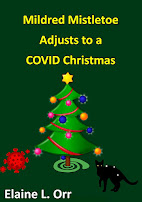
Mildred Mistletoe Adjusts to a COVID Christmas

Several years ago, I wrote about liking to have pets in my books but never writing a story from an animal's point of view. Over the next couple of weeks, I kept thinking, "Why not try?"

That led to Mildred Mistletoe, a black cat born in the manger under the family Christmas tree. I just completed the third story. I started it in 2020, but just couldn't get in the spirit to finish it. I certainly didn't think that in 2021 I'd publish a story called "Mildred Mistletoe Adjusts to a COVID Christmas."

But here we are, and it didn't feel right to ignore the stupid virus. At the same time, I wanted a story that offered at least a little encouragement without being syrupy.

And I do like Mildred. She's always a paw ahead of her humans.

https://www.amazon.com/dp/B09NQZFTF1

https://www.smashwords.com/books/view/1121160

https://books.apple.com/us/book/x/id1601331158 

https://www.barnesandnoble.com/s/2940165118005

https://play.google.com/store/books/details?id=zdNVEAAAQBAJ

                                                             *                 *                 *

To learn more about Elaine, go to elaineorr.com or sign up for her newsletter. 

Sunday, November 28, 2021

Can Income-Earning Authors Take a Break?

Can income earning authors take a break? The short answer is "no." The longer answer is "it depends." The more you earn, and can thus save, the longer you can take a break between books. 

It also depends on whether you used income from well-earning books to buy items (such as houses or cars) that require regular (high) payments.More expenses, higher earning threshhold required.

I make enough to pay many of my normal expenses. I'm fortunate, but I do work hard. 

I had a slow publishing period a couple of years ago and learned that my income does not stay consistent without at least three genre-fiction books per year. No complaints.

To reaffirm this premise, I recently downloaded sales and income data from Amazon and Smashwords (an aggregator that handles sales of most of my books for ibooks and Nook). 

I learned several things.

1) I do need to publish consistently or income drops quickly.

2) If I lower the price or give away the last book in a series before issuing the new one, sales of the new one are highter.

3) If I give away books on Amazon via Kindle Unlimited, it makes little difference in sales.

4) If I give away non-KU books on Amazon because of a price match with other sites, it not only helps sales but I get a lot of Amazon reviews.

5) If I keep the first box set of a series free on all sites but Amazon (via Smashwords), succeeding box set sales are very good. The moral here, for me, is to leave the first books free all the time. (The next two box sets are always in the top ten of box set sales, and have been number one or two at times. Other authors' sets come and go. My Jolie Gentil series stays high.)

6) Better to write some every day rather than try to crunch out three books at the end of the year. That's kind of a big 'duh,' but worth noting.

It's a good idea to pull historical data every year. You can obsess by examining data weekly or monthly, and it works better if you use that time to write.

                                                             *                 *                 *

To learn more about Elaine, go to elaineorr.com or sign up for her newsletter.