Showing posts with label family history. Show all posts

Friday, August 28, 2026

Keeping Track of Family History

By Elaine L. Orr

Early in August, I attended the final reunion of the Orr family of Mount Vernon, Missouri. It began in 1937 (you read that correctly) to celebrate my third great-grandparents' arrival in Southwest Missouri. Ninety years of celebrations for Orrs, Campbells, Shirleys, and more. 

My branch came to the U.S. from Londonderry (Northern Ireland) in 1834, where they worshipped at Aghadowey Presbyterian Church. As the story goes, my GGG grandfather (William Orr) thought there would not be opportunities for their two young sons in Ireland and the boys should go to America. They were both under 3, so he was really looking ahead. My GGG grandmother (Jennie Adams) supposedly bemoaned the idea and then said they would all have to go. 

Aghadowey Presbyterian in 1932

Sadly, they arrived only with son Paul, my GG grandfather. Robert died at sea just before landing. Jennie refused to allow him to be buried at sea and carried him off the ship wrapped in a blanket. It's said the captain inquired as to Robert's health as they disembarked.

Immigrant families were welcomed then. They first went to Ohio, as did a brother (James Orr and wife Jane Reed) who arrived in 1832. Despite a trip to Tuscawares County in that state, I've never been able to figure out why they went there after landing in Canada at "the mouth of the St. Lawrence River." Likely someone from their home parish in Ireland had gone there. Eventually, one family went to Indiana and mine looked for land in Missouri.

That corner of Missouri became the draw for others, first another brother (George and wife Elizabeth Brown), who arrived at the beginning of the Civil War. 

A Late Arrival Permits Thriving in the U.S.

Two years later, a sister (Isabella Orr Campbell) arrived at Castle Gardens with six children. Sadly, her husband, Ephraim, had died during the crossing.

As odd as it may seem, the Campbell arrival is one of my favorite stories. That family tells that the ship their ancestors were supposed to be on (a steamer) left before they arrived at the port. They thus took a sailing vessel, which took six weeks instead of five days – possibly why Ephraim became ill and died. However, the steamer was lost at sea! So many achievements and joys in this family, and none of it would have happened if they had received word of the earlier departure.

Helping Families Over Time

One other family, descendants of sister Martha Orr who married John Mitchell, came to Missouri in the 1880s. Times in Ireland were so difficult that a grandson of Martha's (Sam Knox) wrote to Uncle George to ask for help in coming to America. They'd never met him -- he left before they were born. But they heard that Uncle George had gotten rich in America. 

He sent funds, and Sam and the sister he traveled with, Lizzie, made it to a port and  then traveled to Verona, MO by train. "Rich Uncle George" picked hem up in a rickety wagon. He was said to be parsimonious and stern, but the Knox and Campbell families would have had a terrible time during their early years in America without him. 

Ozark Prairie Cemetery dedicated to Sam Knox.
Sam and Lizzie worked hard, Sam some of the time in a mill that Campbell family members owned in Jasper County. They saved and brought three other siblings and their mother to America. They initially all found work with different Orr and Campbell family members and eventually prospered. 

When Sam died in August 1953, he left $500 to the White Oak Presbyterian Church where he'd worshipped and $500 each to three cemeteries that held extended family members. These were huge sums at that time, especially for the small, rural cemeteries. 

East Coast Arrivals

One more family came to America, that of Ann Orr and husband Valentine Shirley. They, however, went to the east coast, Pennsylvania, where Valentine had family. The impetus for their emigration from Ireland was also economic, but in a different way. The Shirley family was well know for fine linen work. Looms and the beginning of mechanized production ended a lot of their work. 

Unlike the midwestern families, the Shirley descendants began life in America as servants (the girls) and mine and factory workers. Like  the Knox family, they came over time. One brave sister arrived in 1857 and worked for a family in Philadelphia. She saved and brought another sister, but that woman didn't come until 13 years later! Then other brothers and sisters, and finally the parents.

Ann and Valentine were in their sixties when they got to America. William and James were in their twenties, and the parents in the George Orr family and Campbells families in their forties. All together, they arrived between the early 1830s and late 1880s -- a 50-year span.

Keeping Family Ties

As diverse and far-flung as this huge family was, they wanted to keep in contact. They'd done so via letters -- including sharing stories of trips back to Ireland. The Campbells had regular large picnics, which one of my ancestor, William's son, John Adams Orr, had gone to. I thought perhaps he attended their picnics because he (a college graduate) had more in common with some Campbells who'd also been able to attend college. Then I realized while John was one of ten children, he had been the only surviving one for 20 years! 

Before John Adams Orr died in 1936, he asked his sons to bring family members together. The next year, sons William Alfred and George Boyd Orr did just that, and reunions took place over 90 years. One-hundred-seven people from three of the Missouri families attended the first year; over time, families from Indiana and the East Coast joined them. Their get-togethers always took place at a small rural church in Lawrence County, MO -- Ozark Prairie Presbyterian Church, three miles from Mount Vernon.

I try to imagine a family reunion starting today and lasting 90 years, and I can't. Families are smaller and they don't live in close proximity. In fact, that's part of what eventually brought an end to the Orr Reunion. Once there isn't a nucleus in a common location, attendance falls off. Even so, once we announced the last one would be this year, 57 stalwarts got together.

I'll be writing next about the Presbyterian Heritage of this family and how it expanded after arrival in the U.S.

                                                    *                *                *                *

To learn more about Elaine's writing, visit her website or sign up for her newsletter.


Tuesday, July 30, 2024

Social Media Marketing in 20 Minutes a Day

By Elaine L. Orr

Revised December 2, 2024

For authors, there's no substitute for meeting readers, librarians, and bookstore owners  face-to-face. Aside from promoting your work, it's a chance to talk books.

If you want to sell books beyond those you can reach in person, you need to advertise. Some ads can be subject-based, even if you write fiction. For example, I've just scheduled some ads about my family history mysteries in publications of the National Genealogy Society. 

Even if you have a traditional publisher, it's up to you to constantly let people know about your books. After all, people can read them for decades, and a publisher can't be expected to promote them that long.

You may hear that all advertising needs to be targeted, but I believe broadly targeted advertising is important. You want to reach people who may not know they would like to read what you write. But you can't spend a lot of time and money doing that. 

I maintain that twenty minutes a day on social media can make a big difference in sales.

Make sure you do some posts that go beyond "buy my book." I love flowers, so I post them on Instagram a lot. I also post vacation pictures and photos of my cat. Never neglect the weather. Deep snow or storm clouds can be eye-catching. Have a hobby? Post those photos -- have some fun. 

The Most Efficient Way to Organize to Publicize

To spend less time later, assemble short message pieces for each book (or whatever you promote). For each of my thirty-five books, I have several 300-character blurbs that can be alternated on BlueSky, where my handle is @elaineorr55.bsky.social. These short blurbs are organized by each of my four mystery series, then by book. 

In case you're counting, that's a lot of draft posts, and each one contains at least two hashtags. Hashtags are words or very short phrases that begin with the pound sign (#). They help your blurb reach people who have a specific interest. I use #cozymystery or #mustreadmystery, but you also want something related to a specific book. For example, my family history series is set in the #WesternMarylandMountains.

If you keep some books on Kindle Unlimited (which I do for some Box Sets) use hashtags such as #KindleUK or #KindleCanada. Kobo is used a lot in Canada, so you could use #KoboCanada. You get the point. Lately Google sales have increased, so I use that hashtag more.

Why 300 characters? That's the maximum number of characters for a post on BlueSky, but you can use these (or slightly longer ones) on sites such as Facebook or Instagram. Any post needs to have a link to the item you want viewers to buy. I include links to multiple sites, since I sell books on Amazon, Barnes and Noble, Kobo, ibooks, and Google.

Using Graphics Effectively

Pictures draw the eye, so every post needs some kind of graphic. If you don't use any kind of design software (such as Publisher, Photoshop Elements, or Canva), your initial posts can include simply the book cover or something related to the book. 

Some images cost money to download, but you can find free ones. Generally, vectors (which look like cartoons) are more likely to be free. Take photos yourself -- the ultimate free digital content. I buy 100 images at a time from Deposit Photos and it takes years to use them all. They don't expire.

Whatever you do, don't just grab images from the web -- they could be copyrighted.

My graphics are also organized by book, in separate folders on my computer. You don't want to have to hunt for images you've used. The exceptions are folders by holiday. You may simply want to post a Happy Thanksgiving message with a turkey image, or some of your books may have a holiday theme.

Where to Place Your Free Ads

Make no mistake, posts on social media sites are ads. I use BlueSky every day for about 10 minutes -- more if I have a new book or am having a sale. It's a quick way to use hashtags to target readers and reaches readers around the world. 

Post (or schedule posts) at different times of day. If you post at dinnertime where you live, it will be the middle of the night somewhere else. I sell books all over the world, and it's largely due to formerly posting on Twitter, which I no longer use. BlueSky's many millions of users are also around the globe. (See my post on transitioning from Twitter to BlueSky.)

Instagram is easy to use and is very image-based. You load the image before you write any text. Because you aren't limited in length you can use more humor or post on a range of topics besides what you're selling. 

When you load a photo to Instagram, it may show only part of it. Look at the bottom left of the photo and there is a small box that lets you pick the ratio of photo to the space it's in. (That may not be the correct terminology -- just try it until the photo looks ok.)

It's easy to see comments on Instagram, and I end up writing short notes to friends or other authors.

TikTok is video-based, and since I don't know much about videos, I delayed using it. Videos can be just a few seconds. In fact, if they're longer they may be hard to manipulate. TikTok is easier to use from a phone. Take the video and load it from that device to TikTok. If you have difficulty, find a high school kid to help.

Facebook is an older app, but is especially useful if your target audience is older than 25. It may be important to have separate Facebook pages for work and personal use. You may not want readers or other clients to see photos of your family and friends. You also don't want to alienate readers through opinions you may post on your personal page -- politics and product promotion rarely mix.

The key to effective Facebook exposure is to join a couple of groups related to your interests or products. I belong to several that deal with cozy mysteries, since that's what I write. Don't just post and move on. Interact with some of the others in that Facebook group.

Use hashtags in most of your posts on all the sites so you aren't reaching only people you may already know.

Every site lets you create a profile with an photo of yourself or some other image you like. Do that. If someone likes a post they may want to know more about you.

Building Slowly

If this sounds like too much work, think of it as an investment of time to build your marketing inventory. Once you save posts to a word processing document, you're cutting and pasting more than creating new posts.

Pick a site you're comfortable with and do just that for a few weeks or so. If you like photos, Instagram may be your thing. If you want to use short videos, that's TikTok.

I suggest you use BlueSky a lot. It's easy and quick and there is fewer negative comments than on Twitter. There's a tab called profile, and when you click that you see only your posts.

Final Thoughts

Over time, you'll build up followers at each site. You do this by following others and creating interesting posts that encourage people to follow you. Through use of hashtags, you can reach a lot of people before you have a lot of followers. 

Like and repost the posts of others. When you repost theirs, they will repost yours.

Be consistent. If you're only going to post once a month, should you bother? Maybe not. On the other hand, perhaps you only want to post when you have a new book or other product. Personally, I don't think periodic posting will help with sales. 

Finally, don't get drawn into reading lots of others' posts or surfing social media sites. And keep meeting real people! They're more fun.

                                                                  *     *     *     *     *     *

 Check out Elaine's web page or sign up for her newsletter

Wednesday, June 7, 2023

When a Hobby Leads to Mysteries

 By Elaine L. Orr

Most of my mystery series come about because I'm interested in a place. The Jolie Gentil series grew from a love of Mid Atlantic beach towns, especially smaller ones, in the off-season.

The River's Edge series, set along the Des Moines Rivers in Southeast Iowa, grew from my admiration of how residents of Van Buren County, Iowa helped each other after the river flooded in 2008. I still haven't put a flood in one of the books, but I think I've captured the feel of a small, rural town.

The Logland Series was not meant to be one. Huh? I wrote Tip a Hat to Murder as kind of a lark. I'd recently moved to central Illinois and thought, "How come I've never written a book about a place I live?" (I used to live in Iowa, but wrote that series after I left.) The Logland series features a small-town police chief and a lot silly humor at times. So, different for me. Then I didn't want to let go of the characters!

Where did the name Logland come from? Illinois is famous for Abraham Lincoln, right? The first thing little kids learn about him is that he lived in a log cabin. In fact, we all played with Lincoln Logs. I know, it's a groaner.

What about the Family History Mysteries?

My sister describes a day we were all at my aunt and uncle's place on the Rhode River in Maryland. She was standing next to my cousin looking at the water and joked about how I'd become fond of tromping in cemeteries looking for long-dead ancestors. She deemed that weird.

My cousin and her adult daughter looked at each other and back to my sister. They also tromped. My sister said she realized she was the odd one out. (In fact, my cousin Barb and her kids have visited cemeteries and courthouses in six or eight states.)

The photo at right shows the result of that (joyful) work. Most people have names on their family trees. My cousin's wall has photos of ancestors going back several generations. That is a labor of love.

William Orr & two siblings, Missouri
One day late in 2019, it occurred to me I'd never written a book about the state where I lived my first 43 years (Maryland) or created a sleuth who liked to delve into family roots. Thus grew Digger and her Uncle Benjamin, and the Pandemic let me do four books rather quickly.

To get a good sense about my thoughts and how they led to the series, take a look at my post on Lois Winston's blog, Killer Crafts and Crafty Killers. The photo at the beginning was taken in the early 1930s, about 100 years after William Orr left Aghadowey in County Londonderry. The couple in front are his cousins, who stayed in Ireland.

Enjoy!

                                                                 * * * * *


To learn more about Elaine L. Orr, visit her website or sign up for her newsletter.

Thursday, December 30, 2021

A Picture Can Lead to 1,000 Words

 I often take pictures of scenery similar to that in my fiction. Grain elevators feature in Demise of a Devious Suspect, and I have dozens of single and multiple silos.

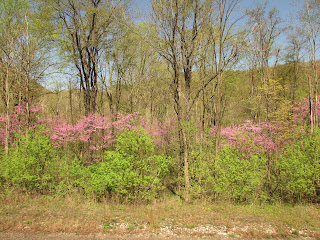
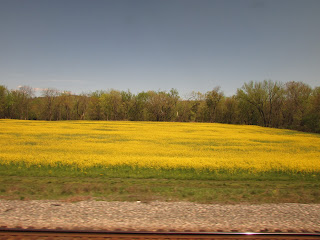
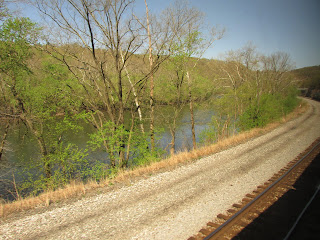
Because I could not travel to Garrett County, Maryland as I wrote the Family History Mystery Series, I'm especially thankful to have photos of that area. Even more so to have captured images from the trains, since they traverse areas I can't travel by car.

Some of these are in Maryland, others may be in West Virginia. There are no state line signposts among the trees.


Early spring in the Appalachian Mountains.
Note the Dogwood trees.


You can't jump out of a train for close-up photos of flowers. My guess would be this is a form of clover or perhaps sulfur cinquefoil, a perennial almost considered a weed.


This gives you a sense of how close the railroad tracks are to the rivers.


I'm still hopeful that 2022 will let me travel to Maryland as I write book four of the series.

                                                             *                 *                 *

To learn more about Elaine, go to elaineorr.com or sign up for her newsletter

Sunday, May 30, 2021

Hobbies Into Books

I've enjoyed using my family history hobby as a jumping off point for the family history mysteries, and my friend Karen Musser Nortman does a bang-up job with the Frannie Shoemaker Campground Mysteries. Since she camps all summer, she also has a built-in marketing modality -- never a bad thing.

I read several recreation or theme-based series. To get a better sense of how other authors handle hobbies in their books, I did a couple of Google searches, with limited success. Google kept wanting to guide me to articles about the best hobbies to list on a resume if you don't have a lot of job experience. Not helpful.

In the genre I write in most, cozy mysteries, there is an entire category for cozy craft and hobby mysteries. A quick survey shows food predominates, with authors such as Joanne Fluke, Ellery Adams, and Abigail Frost. I am a big fan of Molly MacRae's Haunted Yarn Shop Mysteries.

Pets may not be considered hobbies, but there are plenty of cat and dog mysteries. I like the Pampered Pet Mysteries by Sparkle Abbey, which is a good mix of pets and crime. I've read other pet-based mysteries (authors to remain nameless) that focus as much on the pet angle as the mystery. There's only so much I need to know about vet visits and animal costumes.

I think balance is the key for any theme-based book or series. Too much about cooking techniques, bakery shops, or genealogy searches and readers can be turned off. Maybe not if they are big-time into a pastime, but that could narrow the audience.

Until writing the Family History Mystery Series, I started with the setting. I love the Jersey shore, Iowa Rivers, and small towns. It hit me that if I merged a hobby through which I knew people it could lead to readers. Why didn't that occur to me ten years ago? No matter. What matters is I'm having a blast.

    *                       *                        *                         *

To learn more about Elaine, go to elaineorr.com or sign up for her newsletter

Friday, January 29, 2021

History and Mystery Intertwined

When I decided to merge my love of writing with  that of digging into family and local history, I wanted to be sure I didn't delve too deeply into the "how to" aspect of exploring family history. 

It didn't take long to figure out there is only so much license to take when exploring the history of a real place, in my case Garrett County, Maryland. I love riding through the Appalachian Mountains in a train. Or the Allegheny Mountains, if you prefer. While the town of Mountain Grove is fictional any references to the county's history has to be largely accurate. If not, why set it there?

With the Family History Mystery Series, I also faced the challenge of learning more during the COVID pandemic. A planned trip to tour some towns and conduct research fizzled, and I felt fortunate to find publications through the Garrett County Historical Society.

As always, the characters made their preferences known. I had planned for the protagonist, Digger -- you'll never guess how she got her name -- to spend more time plowing through old records and such, but she decided that would be boring. 

She also wanted more friends, so the Unscheduled Murder Trip gives them a bigger role. Book Three, tentatively titled Mountain Rails of Old, will feature the family of Digger's business partner, Holly. She's descended from one of the first free Black families in Garrett County, which will give me a chance to explore more aspects of the county's history.

In my wildest dreams, I never planned to insert a ghost, but one of the key characters was too good to let rest in peace. Writing does take authors down unexpected paths. 

Today marks the releas of the Unscheduled Murder Trip, which was fun to write and let me stretch my writing wings, probably an odd term, given that it relates to the ghost.

I do need that research trip, if only to take a walk around Deep Creek Lake.

                                                                *             *            *            *

To learn more about Elaine, go to www.elaineorr.com or subscribe to her newsletter.